Curu cruise port guide
Curú is a wildlife-refuge landing on the southern Nicoya Peninsula, where a cruise visit centres on forest trails and the shore.
Your arrival at a glance
- Arrival
Ships anchor offshore and tender you ashore. About tendering
- Getting back
Costa Rica · Panama Canal & Central America · Small ships
Checked by Najapi on · Source policy · Suggest a correction
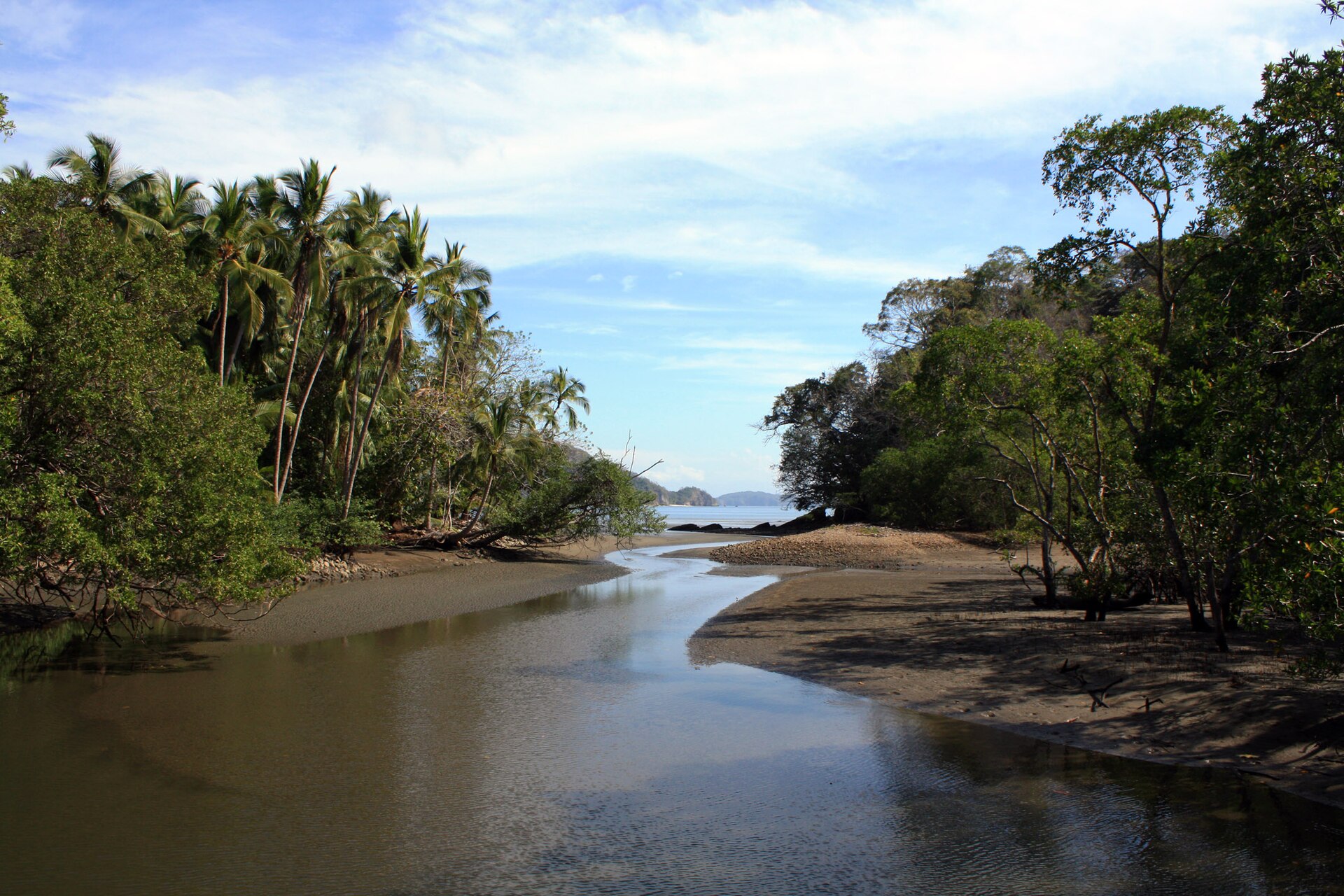
Arrival & Getting Ashore
Plan for a small-boat transfer and a wet landing. Ponant describes Zodiac access to the refuge, while Windstar explicitly describes wading ashore at Curú. The precise sequence depends on the operator. Ponant makes its itinerary subject to weather, port authorisations and applicable local rules.
Keep hands available for the crew's assistance and pack anything vulnerable to spray in a waterproof bag. The ability to walk a forest trail is separate from the ability to climb between boats or step into the water. Explain mobility concerns to the ship before signing up, using the actual landing procedure as the basis for that discussion.
Treat the landing as an organised cruise operation. The refuge's general admission arrangements for road visitors do not provide an independent way back to a ship offshore. Establish whether your voyage permits unescorted time ashore before making separate plans.
About this port
Curú is a wildlife-refuge landing on the southern Nicoya Peninsula, where a cruise visit centres on forest trails and the shore. Ponant includes the refuge as a named ocean-cruise call reached by Zodiac. It is a different kind of day from arriving at a Costa Rican town: choose the walk that suits your ability and concentrate on the wildlife rather than planning onward sightseeing.
The refuge is privately managed and combines conservation with a working estate. The refuge is on the mainland, separate from Isla Tortuga. This guide concerns an ocean-cruise landing at Curú; keep the destination named in your shore programme clear when discussing boat transfers.
Getting Around
The relevant journeys are on foot within the refuge. Curú publishes trails of different difficulty, so ask which are available during your landing and where each returns. As checked on 2026-10-02, its own guide lists Sendero Toledo as a 1.2 km, approximately 45-minute round trip, and Finca de Los Monos as 2.08 km, approximately 1½ hours. These are trail descriptions, not walking times from the boat to a town centre.
Use your naturalist's route and pace for a group excursion. If independent walking is permitted, tell the landing staff your intended trail and turn-round plan. A signposted path's full length can still be too much for the remaining shore time.
Things to Do
A guided wildlife walk: This is the strongest reason to come ashore. Curú's mixture of forest and coastal habitats supports monkeys, coatis and numerous birds. A guide can help locate activity in the canopy; waiting quietly often offers more than covering extra ground. Sightings remain dependent on the animals.
A shorter forest circuit: Toledo is a possible alternative to a longer walk if the excursion programme allows a choice. Choose according to current trail conditions as well as the distance. The refuge lists some routes as closed because of landslides, and its longer Quesera route requires a reservation.
Quiet time by the shore: Use any permitted free time to observe the bay and coastal wildlife. Avoid treating a beach landing as automatic permission to swim. The refuge advises against swimming in its river and estuary because crocodiles have been seen there. Follow the day’s local and ship instructions for the beach as well.
Getting back to your ship
Return to the landing team's designated beach meeting point at the instructed time. A road departure from the refuge will not return you to the ship offshore; keep to the arranged boat transfer. Curú's general rule requires day visitors to leave by 16:00 (checked 2026-10-02), but your ship's landing may end earlier.
Practical Information
Bring shoes for the wet transfer and suitable walking footwear, plus drinking water from the ship, insect repellent, sun protection and a hat. Keep the load light enough to manage during boat transfers. Stay with the agreed route and avoid unmapped shortcuts. Watching wildlife does not require approaching, touching or offering it food.
Sources
Sites consulted: us.ponant.com, windstarcruises.co.uk, checkout-en.ponant.com, curuwildliferefuge.com, visitcostarica.com. Details can change after a guide is checked, so confirm time-sensitive points with the operator. How we check our guides.
Printed from https://portatlas.co.uk/north-america/costa-rica/curu/. Guide check date appears above; consult the sources for time-sensitive details.