Melilla cruise port guide
Melilla is a Spanish autonomous city on the North African coast.
Your arrival at a glance
- Arrival
Ships dock alongside.
- Getting into town
Figures are from the Ribera 1 passenger terminal to Plaza de España, the centre of the later city.
Fares checked .
- Getting back
Spain · Western Mediterranean · Small ships
Checked by Najapi on · Source policy · Suggest a correction
Arrival & Getting Ashore
Getting to the centre: Figures are from the Ribera 1 passenger terminal to Plaza de España, the centre of the later city.
- Taxi: from €4.40 one way, the official minimum fare for a journey starting at the port.
Prices checked 2026-09-08. Sources: Melilla tourism, official taxi tariff.
Orientation, not a walking route
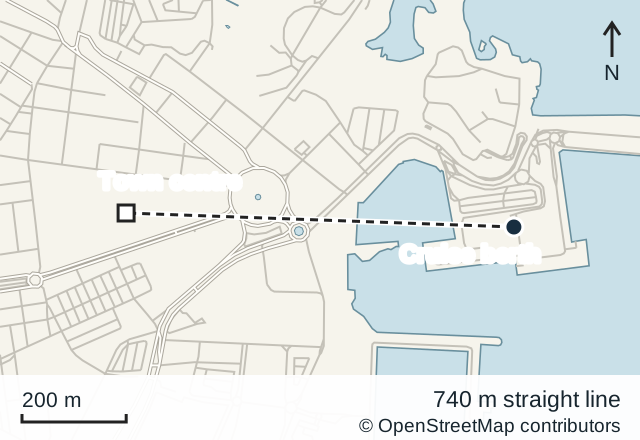
© OpenStreetMap contributors · Open in OpenStreetMap
Cruise ships dock in the port adjoining the city. The port authority’s 2024 annual report identifies the passenger terminal at Ribera 1 as serving ferries and cruises.
The tourism board describes the historic and commercial centre as only a few metres from the port and comfortably reachable on foot. Walking is realistic once passengers leave the operational quay; the older fortifications add slopes and changes of level.
Follow the marked passenger route. The inner harbour, old city and ferry facilities are close on a map but are not interchangeable return destinations.
About this port
Melilla is a Spanish autonomous city on the North African coast. Two contrasting areas make a useful shore visit: the fortified quarters of Melilla la Vieja and the later city around Plaza de España, where decorative façades give an ordinary street walk plenty of interest.
For a short call, choose the old fortifications as the main visit and add a lower-city walk if time permits. Passengers who prefer fewer changes of level can make the newer streets their principal focus.
Getting Around
Walking makes sense for a local visit once outside the operational port. The old fortifications involve slopes, gateways and changes of level; the modern city provides an alternative if you prefer a less strenuous route.
Use Plaza de las Culturas as an orientation point below the old city and Plaza de España for the later urban centre. Set a turnaround point before adding extra streets or another museum. A taxi can reduce the return walk; journeys starting at the port have a €4.40 minimum fare.
There is no need to leave Melilla for a full programme. A visit across the border into Morocco requires separate planning and a documentation check through the organiser and cruise line.
Things to Do
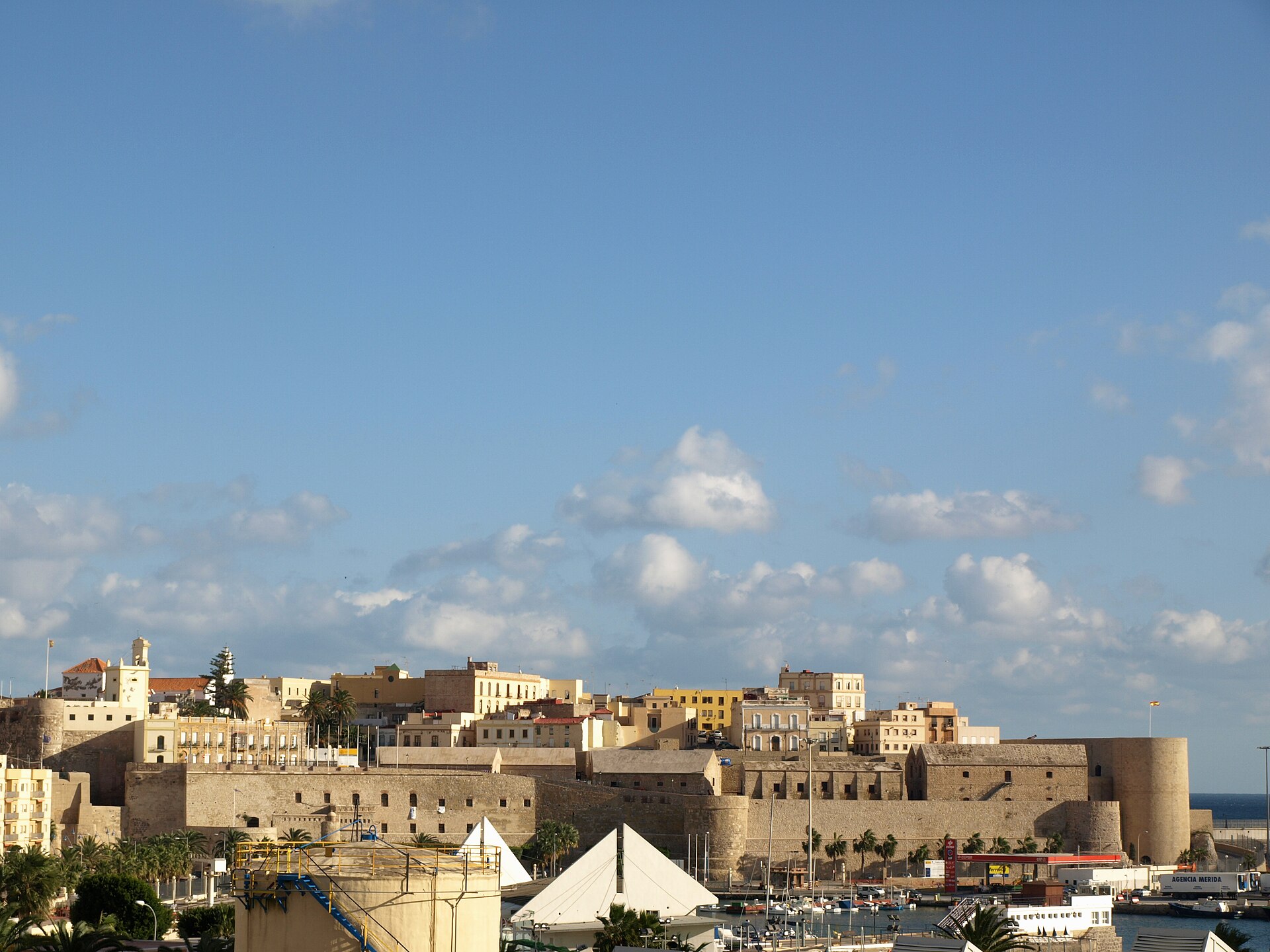
Explore Melilla la Vieja. The historic citadel consists of several fortified enclosures, separated by defensive cuts or moats. Walk through the public streets and gateways, looking at how the spaces connect. It is more informative to explore the fortified complex than to search for a single attraction called the “Moorish Castle”.
Choose an interior visit deliberately. The old city includes the Aljibes, the Conventico and cultural spaces. Consult Melilla tourism's current information before travelling to a particular entrance. Availability, guided access and opening arrangements can differ between sites.
Walk through the modern city. Around Plaza de España and the adjoining streets, look above shopfronts for curved decoration, balconies and floral motifs. The tourism board connects much of this architectural development with Enrique Nieto. Enjoy it as an exterior route without assuming that private or institutional buildings admit visitors.
Leave room for a pause. A café stop in the lower city makes a useful break between the port approach and the climb into the old quarters. If the day is hot or time is short, choose one district and explore it properly.
Getting back to your ship
Use Plaza de las Culturas as an orientation point below the old city and Plaza de España for the later urban centre. Set a turnaround point before adding extra streets or another museum. A taxi can reduce the return walk; journeys starting at the port have a €4.40 minimum fare.
Practical Information
Melilla uses euros (€). Spanish is the official language and 112 is the emergency number.
Wear shoes suitable for historic paving and carry water and sun protection. Individual attractions set their own opening arrangements. Keep the ship's entrance, berth name and return deadline available throughout your walk.
Frequently asked
Can you walk from Melilla cruise port to Plaza de España? Yes. The tourism board describes the historic and commercial centre as only a few metres from the port and comfortably reachable on foot.
How much is a taxi from Melilla port to the centre? From €4.40 one way, which is the official minimum fare for a taxi journey starting at the port.
Do cruise ships dock or tender in Melilla? They dock. The port authority lists Ribera 1 as a passenger terminal serving ferries and cruises.
Sources
Sites consulted: en.melillaturismo.com, puertodemelilla.es, melilla.es, melillaturismo.com, spain.info. Details can change after a guide is checked, so confirm time-sensitive points with the operator. How we check our guides.
Printed from https://portatlas.co.uk/europe/spain/melilla/. Guide check date appears above; consult the sources for time-sensitive details.