Split cruise port guide
Split's main attraction is a living city built into and around Diocletian's Palace.
Your arrival at a glance
- Arrival
Ships dock alongside.
- Getting into town
From Split's city passenger port, head for Diocletian's Palace and Pazar on its eastern side; outer-breakwater berths add a walk through the port to the city-facing waterfront.
Fares checked .
- Walking
You can walk into town. About the walk
- Getting back
Croatia · Adriatic · Large ships
Checked by Najapi on · Source policy · Suggest a correction
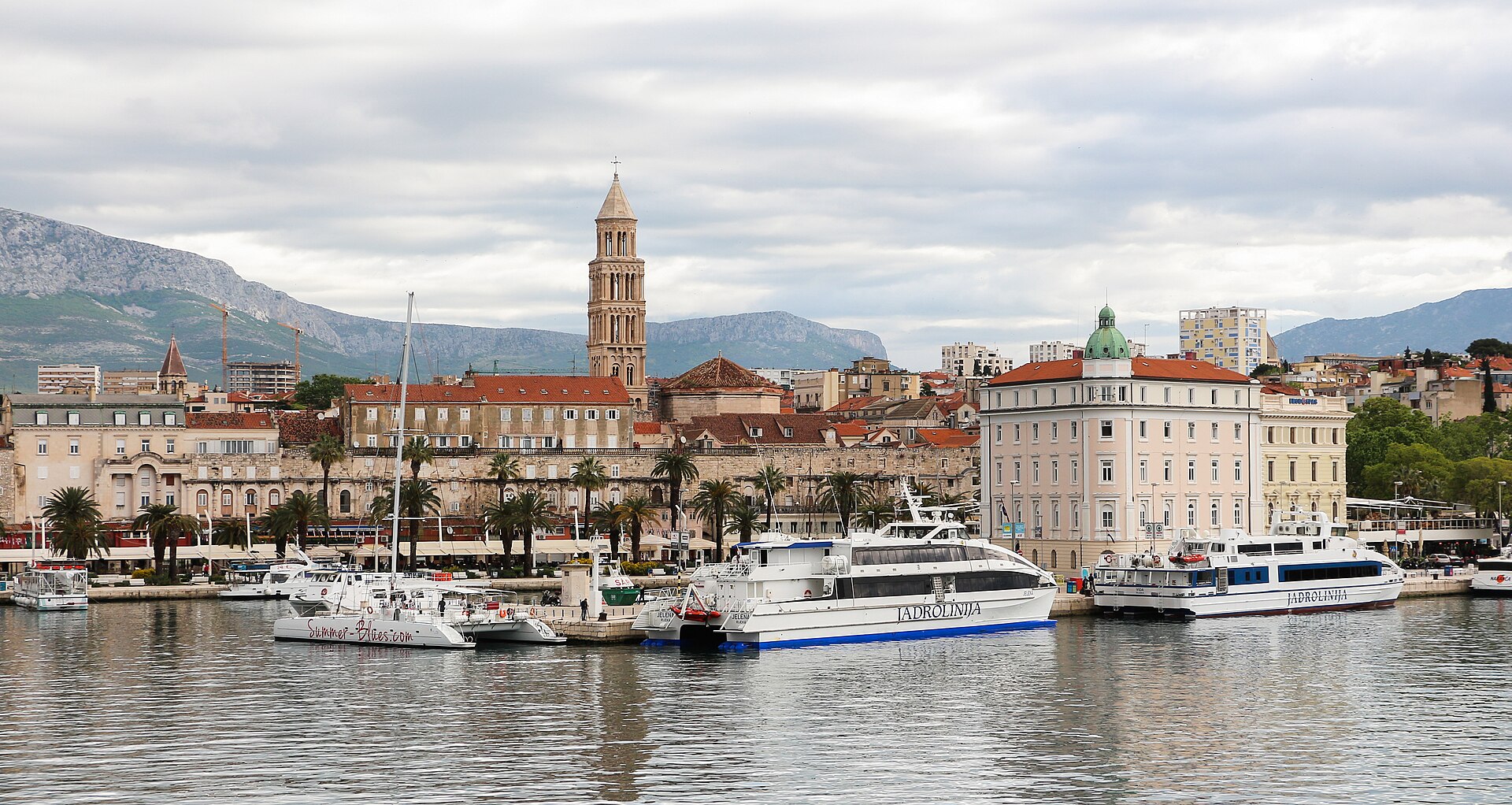
Arrival & Getting Ashore
Getting to the centre: From Split's city passenger port, head for Diocletian's Palace and Pazar on its eastern side; outer-breakwater berths add a walk through the port to the city-facing waterfront.
- Walk: realistic on foot; the port authority gives a general port-to-palace estimate of about 5 minutes, with additional port walking from the outer cruise berths and uneven paving and steps inside the old town.
- Public transport: Promet bus 9 from Trajektna luka towards Ravne njive stops at Zagrebačka (tržnica), by Pazar; €1.50 one way using an advance ticket or the app, or €3.00 one way bought from the driver.
Prices checked 2026-09-08. Sources: Split Port Authority, Promet route 9, Promet fare table effective 1 June 2026.
Orientation, not a walking route
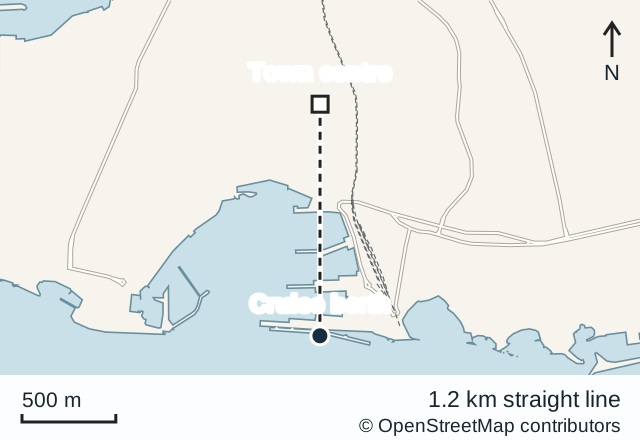
© OpenStreetMap contributors · Open in OpenStreetMap
Cruise ships normally dock in the city passenger port, including at the outer-breakwater cruise berths. The port authority lists alongside cruise facilities and a passenger terminal; anchorage and ship tenders are also available as alternatives.
MedCruise gives a general port-to-centre distance of 200 metres. This does not measure the full route from every cruise gangway: outer berths add a walk through the port before you reach the city-facing waterfront. Follow the authorised passenger route.
Keep a record of your ship's berth or tender location and return collection point rather than relying on the general destination “Split port”, which contains numerous passenger services.
About this port
Split's main attraction is a living city built into and around Diocletian's Palace. Roman structures, later houses, shops and cafés share the historic centre, so exploring does not require a long transfer or a succession of museum visits. UNESCO inscribed the Historical Complex of Split with the Palace of Diocletian in 1979.
For a first call, stay in Split and choose one substantial interior visit, then explore the surrounding lanes and Riva waterfront. There is enough here to fill an unhurried day. Trogir is a separate outing for passengers who specifically want to visit it, rather than a necessary addition after a quick palace circuit.
Getting Around
Walking is the practical choice within the historic centre. Use the palace gates, Peristyle and Riva as reference points, and leave time for uneven paving, steps and busy lanes. If step-free access matters, check the entrance to each paid attraction before purchasing admission; an accessible waterfront route does not establish access to towers or underground rooms.
The tourism board lists local buses and taxis among the city's transport options. For an independent visit to Trogir, Promet route 37 connects Split, the airport and Trogir. Consult the operator's route page for the departure point and current timetable; do not assume that a service labelled “Split” boards beside your cruise berth. Allow for traffic, waiting time and the return journey before committing to another town.
Things to Do
The palace substructures, often called the cellars, make a useful first choice if you want to understand the Roman building. These spaces supported the imperial rooms above and preserve evidence of their layout. They are managed by Split City Museum, whose visitor information provides current opening and admission details. Decide how much of the paid visit you want before joining a queue.
Continue to Peristyle and the Cathedral of St Domnius. The cathedral occupies the former imperial mausoleum, giving the square a particularly clear example of the city's changing uses over time. The nearby Vestibule and palace gates help explain how the ancient complex fitted together. Treat the bell tower as an optional climb, with current entry arrangements checked locally.
For time outside the monuments, explore Pazar, the main produce market beside the eastern side of the palace, or the streets leading towards People's Square, Pjaca. These offer a change of pace and places to stop for refreshments without committing to another journey.
Finish on the Riva, looking back at the palace's seaward frontage. If you still have time, extend the waterfront walk towards the small fishing harbour of Matejuška. Keep this as an adjustable final part of the visit: it is easier to turn back from a stroll than to shorten an excursion with a fixed return departure.
Getting back to your ship
The tourism board lists local buses and taxis among the city's transport options. For an independent visit to Trogir, Promet route 37 connects Split, the airport and Trogir. Consult the operator's route page for the departure point and current timetable; do not assume that a service labelled “Split” boards beside your cruise berth. Allow for traffic, waiting time and the return journey before committing to another town.
Practical Information
Croatia uses the euro (€); its official language is Croatian. The emergency number is 112.
Bring water, sun protection and shoes suitable for stone paving. Respect services and dress requirements at religious sites. Check attraction hours and ticket inclusions with the operator. Preserve enough time to cross the port area and complete the ship's boarding checks or tender return.
Frequently asked
Can you walk from Split cruise port to Diocletian's Palace? Yes. The port authority gives a general port-to-palace estimate of about 5 minutes; outer-breakwater cruise berths add a walk through the port. Expect uneven paving and steps inside the old town.
How much is the bus from Split passenger port to the old town? €1.50 one way with an advance ticket or the app, or €3.00 one way bought from the driver. Take Promet bus 9 from Trajektna luka towards Ravne njive and get off at Zagrebačka (tržnica), by Pazar.
Do cruise ships dock or tender in Split? They normally dock in the city passenger port, including at the outer-breakwater cruise berths. Anchorage and tenders are also available as alternatives.
Sources
Sites consulted: promet-split.hr, portsplit.hr, medcruise.com, whc.unesco.org, visitsplit.com, mgs.hr, european-union.europa.eu, hzzo.hr. Details can change after a guide is checked, so confirm time-sensitive points with the operator. How we check our guides.
Printed from https://portatlas.co.uk/europe/croatia/split/. Guide check date appears above; consult the sources for time-sensitive details.